
Wills, Probate & Estates
Estate matters often combine grief, family pressure, property questions, and court procedure.
Estate planning and administration with procedural clarity
For individuals planning ahead, executors applying for probate, relatives dealing with estates without wills, and families facing succession or inheritance disputes in Trinidad and Tobago.
Working with a wills and probate attorney in Trinidad and Tobago early — whether you are planning your own estate or dealing with a loved one’s affairs after death — can prevent significant cost, delay, and family conflict down the line. A clearly drafted will reduces the scope for dispute about your intentions. A properly administered estate avoids the procedural errors that can hold up property transfers, freeze bank accounts, and leave beneficiaries waiting for months or years longer than necessary. At Martin George & Company, we handle estate work from both ends: helping clients plan ahead with proper documentation, and guiding families through the probate process when the time comes to administer an estate.
In Trinidad and Tobago, dying without a valid will — intestate — means that your estate is distributed according to the rules of intestacy set out in the Administration of Estates Act, Chapter 9:01, rather than your own wishes. The Act allocates fixed shares to the surviving spouse, children, parents, and other relatives in a defined order. That may produce outcomes that do not reflect what you would have chosen, particularly for partners who were not legally married (though common-law partners have limited rights under the Cohabitational Relationships Act, Chapter 45:55), stepchildren, close friends, or anyone outside the immediate family. Even where a will exists, the Wills and Probate Act, Chapter 9:03 sets formal requirements for valid execution — including signature by the testator and attestation by two witnesses — and a will that does not meet those requirements may be challenged on validity grounds. Having your will prepared by a qualified attorney, reviewed periodically, and updated after major life events gives your estate the best chance of being administered efficiently and in accordance with your actual intentions.
Probate, and the related process of obtaining letters of administration where there is no will, is the formal legal step that gives an executor or administrator the authority to deal with the deceased’s assets. Both are governed by the Administration of Estates Act, with applications made to the Probate Registry of the Supreme Court. The process requires careful attention to documentation — the original will (where one exists), the death certificate, an inventory of assets and liabilities, identification of beneficiaries, and Inland Revenue clearance before the grant issues. Where a will is contested, a caveat is entered to prevent the grant being issued, and the matter moves into contentious probate territory, which requires more intensive legal management. Common grounds for contesting a will include lack of testamentary capacity, undue influence, want of due execution, and forgery. We handle both the routine and the disputed end of this work.
Services in this practice area
- Preparation of Wills
- Letters of Administration
- Contentious Probate
- Challenging a Will
- Setting Aside a Grant of Probate or Letters of Administration
- Caveats
- Inheritance Law
- Administration of Estates
- Executors and Trustees guidance
- Variation of Trusts
- Estate Planning
When you consult with us on an estate matter, the first step is to clarify what kind of help is needed: planning, probate, administration, or dispute. If you are here about probate or letters of administration, bring the original will if one exists, the death certificate, a list of assets and liabilities you are aware of, and any correspondence from banks, the Land Registry, or other institutions that have already been in touch. If there is a family dispute in the background, tell us that at the outset — it changes both the process and the advice. Executors and administrators often underestimate how much coordinating an estate involves, and we are experienced in managing that process on behalf of clients who do not want to handle it alone.
Our approach to estates is measured and practical. We do not let technical procedure become a barrier to clear communication, and we keep clients informed of where the matter stands throughout. Where estate property in Trinidad and Tobago needs to be transferred, where a trust requires variation, or where a beneficiary is receiving less than they believe they are entitled to, we bring the same methodical approach to resolving those issues as we bring to planning a new will. The goal is always to give clients certainty about what happens next — and ultimately, a clean outcome for the estate.
Further reading at law.martingeorge.net
For deeper background on T&T wills, probate, and estate law, see the firm’s legal education site:
- Making a Will in Trinidad and Tobago: Legal Requirements and What Happens Without One
- Grants of Representation in Trinidad and Tobago: Probate, Letters of Administration, and Letters with Will Annexed
- Payment of Debts of a Deceased Person in Trinidad and Tobago: The Executor’s Duty and Order of Priority
Will drafting and estate planning
Support for individuals who want to document their intentions clearly, reduce later disputes, and make administration easier for the people left behind.
Probate and letters of administration
Guidance on the applications and court-facing process needed where an executor or family member must lawfully administer an estate.
Estate administration and property transfer
Practical help where estates include land, bank accounts, business interests, or other assets that need to be identified and dealt with properly.
Inheritance and succession disputes
Advice where family members, beneficiaries, executors, or interested parties disagree over entitlement, administration, or the validity of documents.

Built for clients dealing with Trinidad and Tobago legal realities, deadlines, and procedural demands.
Matters we handle
Common instructions in this area
- Will drafting and estate planning
- Probate applications and estate administration
- Letters of administration where there is no will
- Executor, beneficiary, and inheritance disputes
- Property transfer and succession-related coordination
- Caveats and contentious probate matters
- Challenging a will or inheritance entitlement
- Setting aside a grant of probate or letters of administration
- Inheritance-law and succession disputes involving land or family conflict
What to expect
How the first stage usually works
- Clarify whether the matter involves planning, probate, administration, or a dispute and identify the key people involved.
- Review wills, death certificates, title documents, family details, and any existing correspondence or court paperwork.
- Map the next legal and administrative steps so the client knows what has to be filed, gathered, or resolved first.
Why clients use this practice
Calm guidance during difficult periods
Estate work often happens while families are grieving or under pressure. The page is structured to keep the legal process understandable and orderly.
Planning and disputes in one place
Clients can use the same service line whether they need a will prepared, an estate administered, or a probate-related disagreement assessed.
Tied to local estate procedure
The content is shaped around the practical reality of probate, letters of administration, succession-linked property issues, and estate paperwork in Trinidad and Tobago.
Related attorneys
Your Wills, Probate & Estates Legal Team
Meet the attorneys most closely connected to estates work.
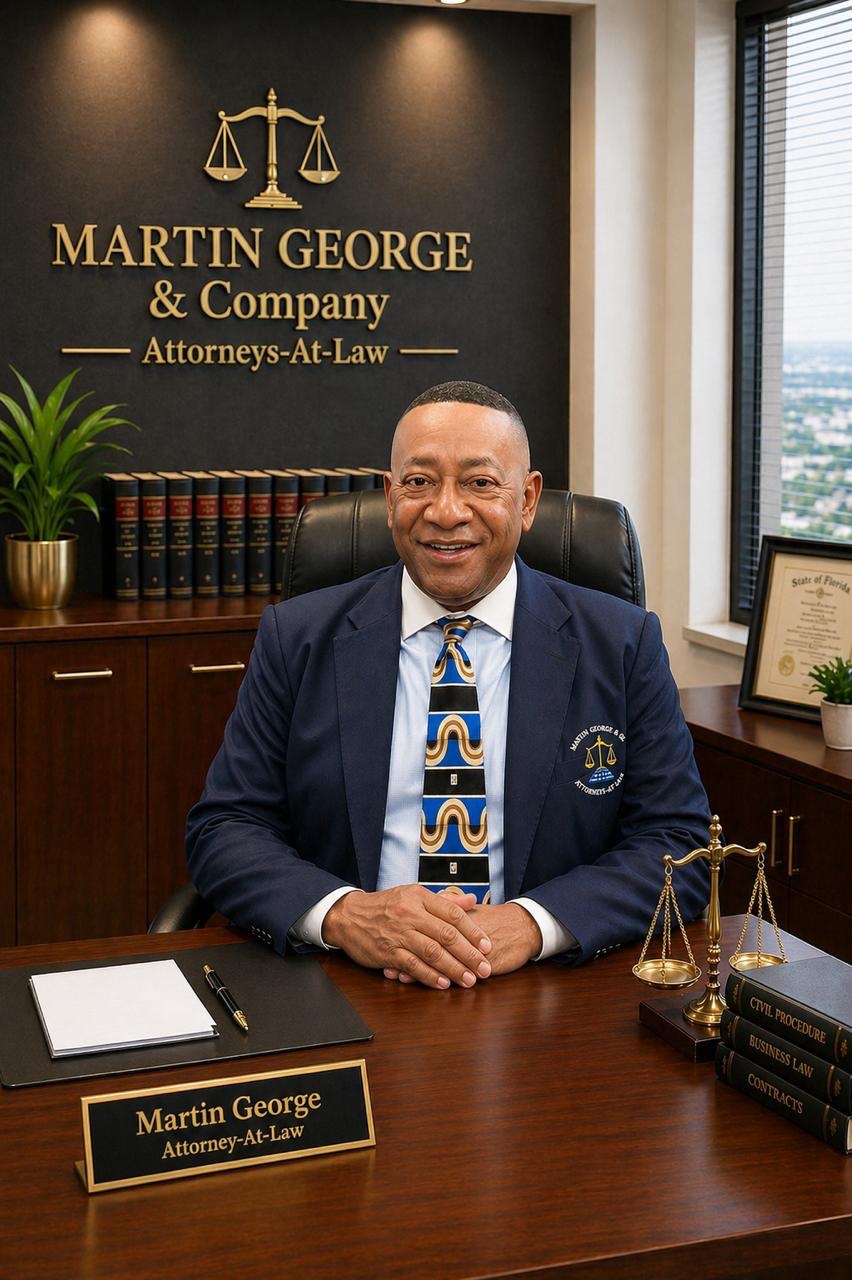
Martin George
Senior Partner & Lead Counsel
Senior Partner and Lead Counsel with more than 30 years of practice in the courts of Trinidad and Tobago, leading the firm across all of its practice areas with a calm, measured, results-driven approach.

Keshavi Khoorban
Partner, Attorney-at-Law
Partner at Martin George & Company with the firm since 2017, focused on civil law including Industrial Court matters, matrimonial and family law, and estate and probate.
Frequently asked questions
What is the difference between probate and letters of administration?
Probate is the court order confirming an executor's authority to administer an estate where there is a valid will. Letters of administration are required where there is no will (intestacy) or where no executor is able or willing to act. Both are governed by the Administration of Estates Act, Chapter 9:01, and applications are made to the Probate Registry of the Supreme Court.
What happens if a person dies without a will in Trinidad and Tobago?
The estate is distributed under the rules of intestacy in the Administration of Estates Act, Chapter 9:01. The surviving spouse, children, and other relatives take in fixed shares regardless of what the deceased might have intended. Common-law partners may have rights under the Cohabitational Relationships Act, Chapter 45:55, but those are limited and time-bound. Drafting a will is the only reliable way to control the distribution.
Can estate matters involve property and title issues as well?
Yes. Estates frequently involve land, and the grant of probate or letters of administration is usually a precondition to transferring the deceased's interest under the Conveyancing and Law of Property Act, Chapter 56:01. Where land has been occupied by a relative without formal transfer, a separate adverse-possession analysis under the Real Property Limitation Act, Chapter 56:03, may also be necessary.

Ready to discuss your matter?
Speak with the firm about estates issues, timelines, and the best next step for your situation.