
Civil & Commercial Litigation
When a dispute threatens business operations, cash flow, reputation, or control of an asset, clients need clear advice on the available remedies and how quickly the firm can act.
Strategic litigation and dispute management
For companies, directors, investors, professionals, and private clients involved in contested civil claims, business disputes, urgent applications, or litigation risk.
When a business dispute, debt recovery matter, or contested civil claim reaches the point where legal intervention becomes necessary, having a civil litigation attorney in Trinidad and Tobago with real courtroom experience on your side is not a luxury — it is a practical requirement. Litigation is expensive, time-consuming, and unpredictable when it is not managed strategically from the outset. At Martin George & Company, we have represented clients in the High Court, the Court of Appeal, and before the Industrial Court for over thirty years. Our approach to civil and commercial disputes is built around one question: what is the most effective way to protect the client’s position given the evidence, the risk, and the remedy they are seeking?
Civil litigation in Trinidad and Tobago is governed by the Civil Proceedings Rules 1998 (CPR), which require parties to follow pre-action protocols and explore settlement before issuing a claim. Most civil claims are subject to time limits under the Limitation of Certain Actions Act, Chapter 7:09 — typically four years for contract and tort claims, longer for claims involving land or deeds. Commercial disputes between shareholders, directors, and companies are governed by the Companies Act, Chapter 81:01, with derivative actions, oppression remedies, and winding-up applications available where the statutory grounds are met. Industrial-relations matters between employers and employees fall under the Industrial Relations Act, Chapter 88:01 and are heard at the Industrial Court rather than the High Court. Knowing the correct forum, the applicable limitation period, and the available statutory remedies before issuing a claim is essential — and often determines whether the matter is winnable.
Not every commercial dispute should go straight to court. Some can be resolved through firm pre-action correspondence, without the delay and cost of proceedings. Others require urgent court intervention — a Mareva injunction to freeze assets, an Anton Piller order for search and seizure, or a prohibitory injunction to restrain a threatened breach. These are available under Part 17 of the CPR where the threshold is met (a good arguable case, a real risk of dissipation, and the balance of convenience). Knowing which path to take, and when to shift between them, is where experienced litigation counsel adds the most value. We assess the strength of the claim, the likely response of the other side, the urgency involved, and the practical outcome the client is trying to achieve before recommending a course of action. Where summary judgment under Part 15 is available, we pursue it. Where a negotiated settlement is genuinely in the client’s interest, we advise that clearly and without equivocation.
The firm’s civil and commercial litigation practice covers the full range of disputes that arise between individuals, businesses, and institutions in Trinidad and Tobago. This includes debt recovery (governed by the same limitation regime), complex multi-party commercial disputes, industrial-relations matters before the Industrial Court, banking and financial disagreements, insurance disputes, and corporate conflicts between shareholders or directors under the Companies Act. Where constitutional or administrative law issues intersect with a commercial matter — for example, judicial review of a regulatory decision affecting a business — those can be addressed within the same broader representation rather than treated as entirely separate proceedings.
Services in this practice area
- Civil Claims
- Commercial Disputes
- Breach of Contract
- Debt Claims
- Negligence
- High Court Litigation
- Court of Appeal Matters
- Industrial Court / Industrial Relations
- Banking and Financial Disputes
- Insurance Disputes
- Corporate Disputes
- Injunctions
- Damages Claims
- Summary Judgment Applications
- Contempt of Court Applications
Before a litigation consultation, it helps to gather the core documents: the contract or agreement in dispute, a clear timeline of what happened and when, any correspondence between the parties, and an honest account of what you want to achieve and what you are willing to accept as an outcome. You do not need to have a formed legal theory — that is our job. You need to give us enough factual material to assess liability, quantify the claim or defence, and identify the most effective next step. For urgent applications involving injunctions or contempt of court, contact us as soon as the threat materialises — delay in those matters can limit the relief available.
Our litigation team is direct about risk, realistic about timelines, and focused on outcomes rather than process for its own sake. Clients across Port of Spain, South Trinidad, and Tobago who are dealing with contested commercial or civil matters can expect clear advice on the merits, transparent guidance on costs, and active management of their case from the first consultation through to resolution. We do not let matters drift, and we do not let the other side set the pace.
Further reading at law.martingeorge.net
For deeper background on civil and commercial law in T&T, see the firm’s legal education site:
- Contract Law in Trinidad and Tobago: Formation, Breach, and Remedies
- Misrepresentation in Contract Law in Trinidad and Tobago
- Alternative Dispute Resolution in Trinidad and Tobago: Mediation, Arbitration, and How to Resolve Disputes Without Going to Court
- Enforcing Court Judgments in Trinidad and Tobago: Writs, Garnishee Orders, and Committal
- The Tort of Negligence in Trinidad and Tobago: Elements, Proof, and Defences
- Private Nuisance in Trinidad and Tobago: Neighbour Disputes and the Law
Contract and payment disputes
Advice and representation where agreements have broken down, invoices remain unpaid, or one side needs urgent leverage to preserve its position.
Business and shareholder conflict
Support in commercial disputes affecting ownership, management, decision-making, and relationships between business stakeholders.
Injunctions and urgent relief
Rapid review where a client needs interim protection, restraint, preservation of assets, or another urgent court remedy.
Debt recovery and civil claims
A structured approach to disputed debts, civil liability, and matters that may require pre-action strategy, negotiation, or proceedings.

Built for clients dealing with Trinidad and Tobago legal realities, deadlines, and procedural demands.
Matters we handle
Common instructions in this area
- Breach of contract and payment disputes
- Shareholder and business-owner conflict
- Urgent injunction applications
- Debt recovery and contested civil claims
- Insurance, banking, and related commercial disagreements
What to expect
How the first stage usually works
- Outline the dispute, the parties involved, the commercial risk, and any deadlines or threatened action.
- Review agreements, correspondence, internal records, and the practical options for negotiation, protection, or proceedings.
- Move into pre-action strategy, urgent applications, or litigation depending on the strength of the claim and the remedy required.
Why clients use this practice
Built for contested matters
The page is designed around the practical questions clients ask when they need representation fast: urgency, documents, leverage, and next steps.
Commercially aware approach
Not every dispute should be fought the same way. Strategy is shaped by risk, reputation, cost, and the business outcome the client is trying to protect.
Prepared for urgency
The service flow leaves room for injunction work, protective action, and fast review where a commercial or civil issue cannot wait.
Related attorneys
Your Civil & Commercial Litigation Legal Team
Meet the attorneys most closely connected to litigation work.
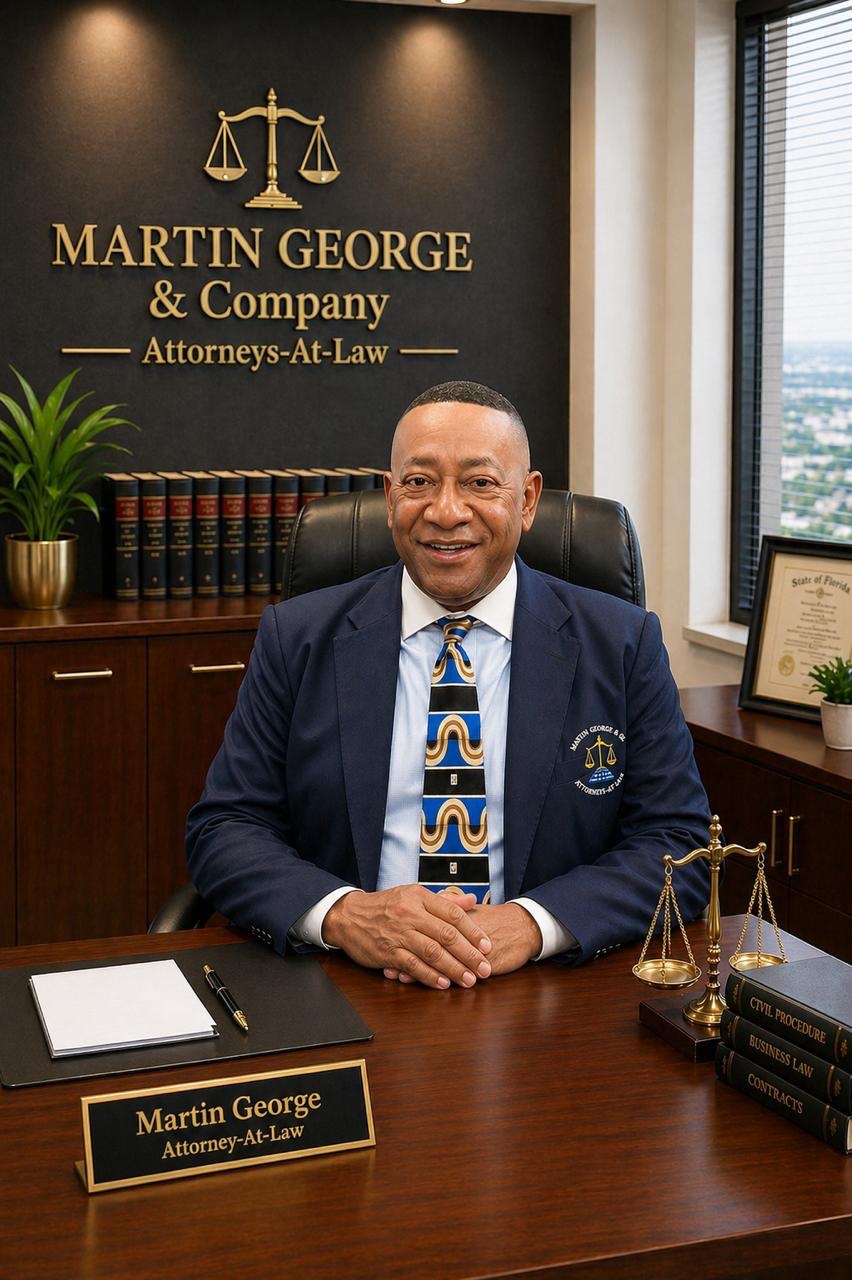
Martin George
Senior Partner & Lead Counsel
Senior Partner and Lead Counsel with more than 30 years of practice in the courts of Trinidad and Tobago, leading the firm across all of its practice areas with a calm, measured, results-driven approach.

Danesha Munroe
Attorney-at-Law
Instructing Attorney-at-Law admitted to practise in 2023, building experience in negligence claims, mortgage and financial institution disputes, defamation and social media slander, and employment dispute resolution with major local and international companies.
Frequently asked questions
What is the limitation period for a civil claim in Trinidad and Tobago?
Most civil claims for breach of contract or tort must be brought within four years of the cause of action under the Limitation of Certain Actions Act, Chapter 7:09. Claims involving land have longer periods (16 years in many cases). Claims under deed have a longer period than simple contract claims. Once the limitation period has passed, the claim is generally statute-barred — making early advice critical.
Does every civil or commercial dispute have to go straight to court?
No. Under the Civil Proceedings Rules 1998 (CPR), parties are expected to follow pre-action protocols and explore settlement before issuing a claim. Many disputes resolve through pre-action correspondence, negotiation, or mediation. The right path depends on urgency, leverage, the strength of the underlying case, and the commercial outcome the client is seeking.
When should I seek help for an injunction or urgent order?
As soon as there is a real risk of dissipation of assets, breach of rights, damage to the business, or another event that could make later relief ineffective. Mareva injunctions (asset freezing), Anton Piller orders (search and seizure), and prohibitory injunctions are all available under Part 17 of the Civil Proceedings Rules where the threshold is met.


Ready to discuss your matter?
Speak with the firm about litigation issues, timelines, and the best next step for your situation.